
High Pressure Casting
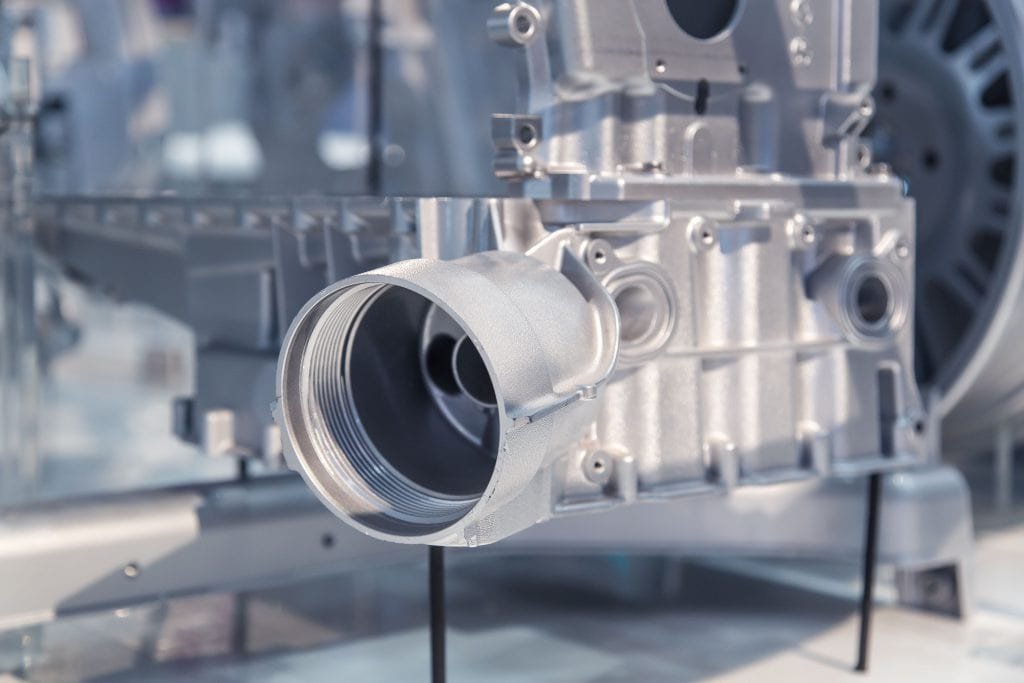
Low Pressure Die Casting
Low-pressure die casting is a metalworking process used to create complex metal parts with high accuracy and minimal defects. Unlike high-pressure die casting, which uses high-pressure injection to fill molds, low-pressure die casting involves filling the molds with metal using low pressure, typically less than 0.5 MPa (72.5 psi). This method offers several advantages and finds application in various industries.
Process Overview:
-
Preparation: The process begins with the preparation of the mold, usually made of steel or iron, which is preheated to a specific temperature. The mold cavity is coated with a release agent to facilitate metal removal after casting.
-
Filling: The molten metal, often aluminum or magnesium alloys due to their low melting points and good fluidity, is poured into a holding furnace. The furnace is connected to the mold, which is sealed and pressurized with gas to around 0.1 to 0.5 MPa.
-
Injection: The molten metal is then injected into the mold cavity through a riser tube using low pressure, ensuring a controlled and uniform flow that reduces turbulence and porosity.
-
Solidification: After filling the cavity, the metal solidifies under pressure, forming the desired shape of the part.
-
Cooling and Ejection: The mold is cooled, and once the part has solidified sufficiently, it is ejected from the mold, trimmed, and finished as needed.
Uses and Benefits:
-
Complex Geometry: Low-pressure die casting is ideal for parts with intricate designs, thin walls, and complex shapes, such as engine components, gearbox housings, and structural parts in automotive and aerospace industries.
-
High Dimensional Accuracy: The controlled filling and solidification process results in parts with tight tolerances and minimal shrinkage, reducing the need for additional machining and ensuring precise assembly.
-
Reduced Porosity: Low-pressure casting minimizes gas entrapment and porosity in the final part, improving mechanical properties like strength, fatigue resistance, and surface finish.
-
Cost-effective: While requiring specialized equipment, low-pressure die casting can be more cost-effective than other methods for producing medium to large quantities of parts, especially when intricate designs or high precision are necessary.
-
Material Flexibility: Aluminum and magnesium alloys are commonly used due to their lightweight, corrosion resistance, and good mechanical properties. These materials are suitable for various applications in automotive, aerospace, and consumer goods industries.
